

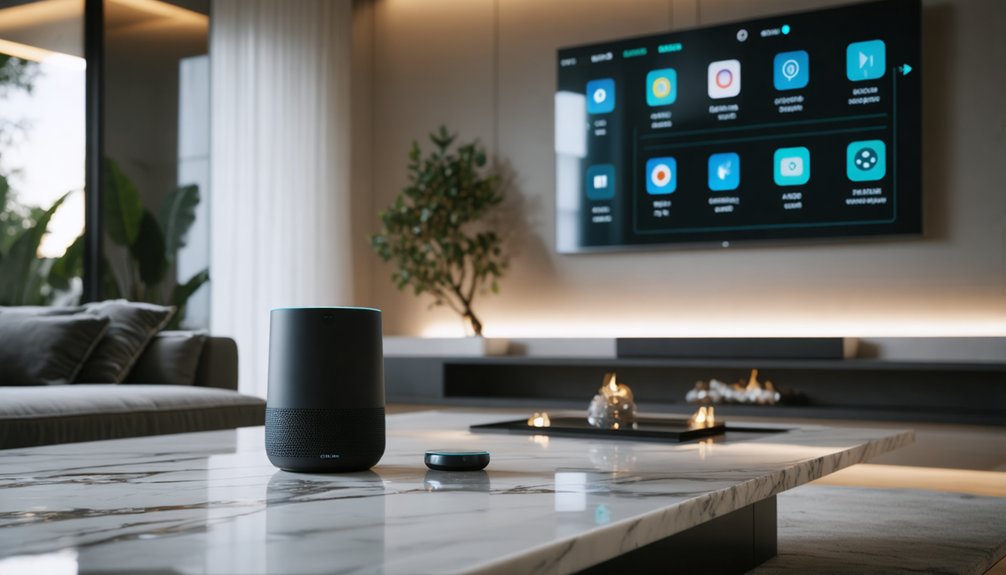

Smart home devices are evolving significantly through artificial intelligence, enhancing user experiences, energy efficiency, and security. AI-driven virtual assistants adapt to individual preferences, while machine learning algorithms optimize device functionality. These advancements allow for predictive behaviors that ensure comfort and protection. Furthermore, AI facilitates seamless integration across diverse devices, overcoming interoperability challenges. As the smart home market continues to grow, the potential for innovation expands. Further exploration reveals the promising future of AI in these interconnected ecosystems.
Highlights
- AI-powered virtual assistants anticipate user commands and adapt home settings based on individual habits and biometric data.
- Machine learning algorithms analyze user behavior, allowing devices to intuitively adjust to preferences for enhanced user experiences.
- Smart thermostats and AI-driven smart meters optimize energy consumption by learning occupants’ routines and providing real-time feedback.
- AI-enhanced home security uses behavioral pattern recognition and predictive algorithms for proactive threat detection and monitoring.
- Device integration is streamlined by the Matter protocol, allowing for seamless communication between diverse smart home devices.
The Growth of the Smart Home Market
The smart home market has undergone outstanding growth, evidenced by its significant valuation and expansion path. Currently valued at approximately $149.43 billion, the market is positioned to reach staggering heights, with projections suggesting a value of $633.2 billion by 2032. Market trends indicate that consumer adoption is accelerating, particularly in North America, which holds a commanding 32.24% share of the global market. This surge is largely driven by advancements in smart technology, an increase in home automation demand, and a shift towards energy-efficient solutions. As consumers increasingly accept the benefits of connectivity, comfort, and convenience, the smart home market is expected to continue its upward course, nurturing a sense of belonging through a more integrated living environment. The U.S. smart home market is projected to grow from USD 33.26 billion in 2025 to USD 99.40 billion by 2032, showcasing the increasing demand for smart home devices. Home security’s market share is set to increase by 6% in a seven-year period, showcasing the importance of safety in smart home advancements. As the global smart home market is expanding at a CAGR of 27.10%, this growth trajectory also highlights the rising consumer confidence in adopting innovative home solutions.
AI Technologies Transforming Home Automation
Emerging technologies in artificial intelligence are reshaping the scenery of home automation, enhancing user experiences and driving efficiency. AI-powered virtual assistants have evolved beyond simple voice activation, now anticipating commands and adapting home settings based on biometric data and individual habits. Through seamless device integration, courtesy of the Matter protocol, homeowners can unify diverse brands, creating a cohesive smart environment. These systems learn daily routines, optimizing comfort and energy use while offering predictive maintenance alerts. Additionally, situational awareness enables assistants to personalize responses for family members, promoting a sense of belonging. Furthermore, AI-driven contextual awareness allows for a more tailored interaction with devices, ensuring that responses are relevant to the person using them. Collectively, these advancements change homes into intelligent ecosystems that prioritize convenience, cohesiveness, and personalized living experiences. Additionally, the integration of Matter protocol provides long-term viability for homes with smart systems, ensuring seamless operation across various brands.
Enhancing Energy Efficiency Through AI
AI technology is increasingly playing a crucial role in enhancing energy efficiency within smart homes. By utilizing machine learning algorithms, these systems analyze extensive energy data, uncovering consumption patterns that can lead to significant energy savings. The rising demand for energy efficiency in smart home devices further drives the integration of AI technologies. Smart thermostats learn occupant behaviors, adjusting heating and cooling in real-time for ideal comfort. AI-driven smart meters provide immediate feedback, allowing households to operate at peak efficiency by coordinating with smart grids. Additionally, smart grid technology enables homes to efficiently balance supply and demand, optimizing energy usage during peak periods. Moreover, predictive algorithms identify potential malfunctions before they escalate, ensuring continuous system performance. The integration of renewable energy sources is streamlined by AI, maximizing the use of solar and wind power while minimizing costs. Collectively, these advancements promote a sustainable and energy-efficient environment, nurturing a sense of belonging among conscientious users. As smart home technology continues to evolve, connected devices will increasingly work together to create a harmonious living experience.
Security Advancements in Smart Homes
With the integration of smart home technology prioritizing energy efficiency, a parallel focus has emerged on enhancing security measures within these environments. Advances in home security now employ AI-driven behavioral pattern recognition to monitor daily routines of residents, swiftly identifying any anomalies that could signal threats. Advanced behavioral pattern recognition will learn a family’s daily routines and highlight abnormalities that suggest security concerns. Predictive threat assessments combine local crime data and event patterns, allowing systems to recognize suspicious activity in real time. Additionally, AI-powered surveillance improves threat detection by minimizing false alarms and employing facial recognition technology. Sophisticated sensors and biometrics are becoming essential in securing entrances, while seamless integration of devices enables proactive responses to potential dangers.
As smart homes evolve, addressing both physical and cyber threats remains paramount for the safety and peace of mind for families. Furthermore, AI-powered surveillance enhances threat detection capabilities by leveraging facial recognition technology.
The Role of Machine Learning in User Experience
As smart home ecosystems continue to evolve, the role of machine learning in enhancing user experience becomes increasingly significant.
Machine learning algorithms analyze behavioral patterns, allowing devices to intuitively adapt to user preferences without manual input.
This personalization promotes seamless automation, with 41% of users utilizing routine-based features like morning wake-ups.
Additionally, advanced learning algorithms enable smart systems to understand and process natural language, further improving the interaction experience.
By analyzing data collected from sensors and applications, these systems optimize energy use and security settings based on individual habits.
As a result, smart homes not only enhance comfort and convenience but also create a sense of belonging, establishing environments customized to users’ unique lifestyles.
Major Players in the Smart Home Ecosystem
The smart home ecosystem is shaped by various key players that contribute to its expanding capabilities and user appeal.
Voice assistant platforms such as Amazon Alexa and Google Assistant are crucial, offering voice control over smart devices and serving as command centers for users.
Philips Hue and Govee are renowned in smart lighting, enabling seamless device integration and customized ambiance.
Similarly, Google’s Nest and Ecobee lead in climate control, optimizing home temperatures efficiently.
Security innovations, including Nuki Smart Lock and eufy cameras, enhance safety, while platforms like Home Assistant guarantee advanced cohesion between disparate devices.
Together, these major players nurture an interconnected environment that anticipates user needs, enhancing the overall smart home experience and promoting a sense of belonging, with these platforms playing a critical role.
Challenges in the Integration of Smart Devices
Despite the revolutionary potential of smart home devices, significant challenges impede seamless integration within households. Device compatibility issues arise from diverse communication protocols such as Wi-Fi, Zigbee, and Z-Wave, which create barriers for devices to operate cohesively. Proprietary systems employed by various brands further restrict third-party integration, leaving consumers with limited options.
The fragmented market, characterized by numerous manufacturers, results in devices that often cannot communicate uniformly. These interoperability challenges hinder the creation of a truly smart home experience. Additionally, maintaining real-time data synchronization among different devices complicates setup and management for average users.
As a result, the integration of smart home devices largely relies on sturdy hubs to bridge protocol fragmentation and enhance cross-device communication to plunge into a more connected experience. Furthermore, the reliance on these hubs highlights the need for a more resilient infrastructure to support the smart home ecosystem.
The Future of AI in Smart Home Solutions
Integration challenges in smart home devices highlight the pressing need for advancements in artificial intelligence (AI) to enhance user experience and functionality.
The future of AI in smart home solutions is positioned to revolutionize homes into predictive environments.
Voice assistants, fueled by natural language processing improvements, will facilitate smoother interactions, while home automation will learn and adapt to user behaviors, automatically managing lighting and temperature.
AI-driven security features will offer proactive safety measures, identifying threats in real time.
With the projected growth of the smart home market, AI will enable interconnected ecosystems that promote energy efficiency and facilitate aging-in-place.
Such innovations not only uplift everyday living but also nurture a stronger sense of belonging within technologically advanced communities.
References
- https://seo.goover.ai/report/202505/go-public-report-en-22aa095c-78a2-49aa-9acc-37f9dabde637-0-0.html
- https://rack2reality.wordpress.com/2025/08/17/ai-transforming-smart-homes-2025/
- https://www.precedenceresearch.com/smart-home-platforms-market
- https://www.insightaceanalytic.com/report/ai-in-smart-home-technology-market/2704
- https://www.thebusinessresearchcompany.com/report/artificial-intelligence-ai-in-home-automation-global-market-report
- https://webmobtech.com/blog/ai-for-smart-homes-revolution/
- https://claritas.com/trends-in-smart-home-tech/
- https://explodingtopics.com/blog/smart-home-market
- https://www.precedenceresearch.com/smart-home-market
- https://www.fortunebusinessinsights.com/u-s-smart-home-market-107731