

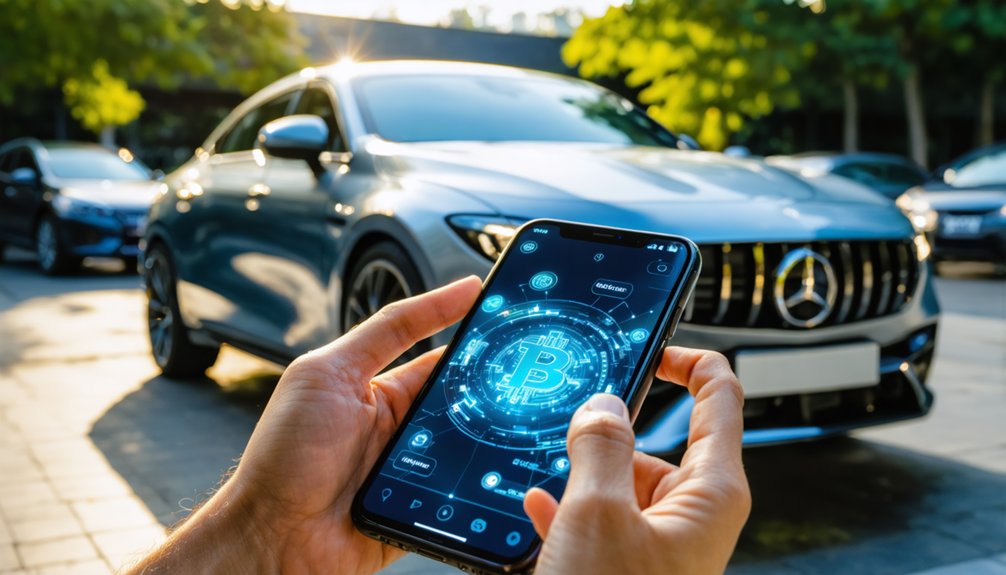

Buying a car with cryptocurrency is gaining traction as dealerships increasingly accept digital currencies. The process involves securing a crypto wallet, transferring funds, and finalizing legal documentation. Bitcoin remains the dominant currency, with Ethereum and stablecoins emerging as alternatives. While transactions offer speed and privacy, buyers should be mindful of fees, taxes, and market volatility. Geographic variation exists in acceptance rates, influenced by regional dealership trends and payment processors. Further perspectives reveal the changing terrain of crypto in automotive sales.
Highlights
- Ensure you have a secure crypto wallet with sufficient funds before initiating a car purchase.
- Major brands like Tesla, BMW, and Lamborghini accept Bitcoin; some also accept Ethereum and stablecoins.
- Transaction fees may apply, so consider these costs along with possible capital gains taxes on appreciated cryptocurrencies.
- Verify the dealership’s wallet address with a small test transaction to ensure accuracy before transferring funds.
- Document the transaction thoroughly to meet all legal requirements and secure your purchase.
Understanding Cryptocurrency Acceptance in Dealerships
The acceptance of cryptocurrency in automotive dealerships marks a significant shift in the traditional car-buying process, reflecting broader trends in digital finance. A growing number of dealerships, including the Jeff Wyler Automotive Family and Carriage Auto Group, are embracing cryptocurrency, indicating sturdy dealership trends. Luxury brands such as BMW and high-end vehicle specialists like BitCars also facilitate these transactions, broadening market analysis. Payment processors like BitPay and Coinbase are integral, enabling seamless transactions while converting cryptocurrencies to U.S. dollars. Additionally, some luxury car dealerships, including Lamborghini Newport Beach, have begun to accept Bitcoin for their vehicles. Not every car dealership accepts cryptocurrency as a form of payment, highlighting the need for consumers to research and confirm payment options before proceeding with a purchase. Despite non-unified manufacturer policies on crypto, individual dealerships show inclination toward acceptance, indicating a potential wave of future integrations. This changing scenery embodies the automotive industry’s metamorphosis, catering to consumers seeking innovative payment options in their car-buying experience, as more dealerships are beginning to accept Bitcoin for vehicle purchases.
The Payment Process for Purchasing a Vehicle
Growing acceptance of cryptocurrency in automotive dealerships necessitates a new understanding of the payment process involved in purchasing a vehicle with digital assets. The initial step involves obtaining a secure crypto wallet from trusted services like Coinbase or eToro. Buyers must guarantee their wallet contains adequate funds, considering transaction fees and taxes. Before completing a full payment, it’s prudent to conduct a small test transaction to verify the dealership’s wallet address. Once confirmed, the agreed cryptocurrency amount can be transferred, taking care to monitor the transaction on the blockchain for security. Additionally, many dealerships now accept Bitcoin payments as it helps avoid currency conversion fees when buying cars internationally. Finally, it’s essential to secure formal documentation to finalize the purchase, guaranteeing all legal requirements are met while leveraging the enhanced security offered by blockchain technology. Increasingly, dealers are accepting cryptocurrency payments to facilitate faster transactions and improve customer satisfaction. Additionally, CryptoAutos partners with hundreds of dealerships to make the buying process even smoother.
Commonly Accepted Cryptocurrencies for Car Payments
Cryptocurrency has increasingly become a viable option for vehicle purchases, expanding the terrain of payment methods available to consumers. Bitcoin remains the most widely accepted currency among major manufacturers such as Tesla, BMW, and Lamborghini, with over 100 dealerships in the U.S. and Europe accepting it. Ethereum also holds a significant presence, with companies like Ferrari and BYD recognizing its utility, highlighted by the acceptance of stablecoins like USDC. These developments reflect broader crypto trends in the automotive sector. Alternative currencies, including Dogecoin, have emerged, showcasing a diversification that aligns with current market analysis. Payment platforms like BitPay support a range of cryptocurrencies, enhancing consumer options when acquiring vehicles through this modern financial avenue, and allowing them to take a plunge into the world of cryptocurrency for their purchases. Additionally, top EV brands such as Rimac Automobili and Carriage Kia are now embracing crypto payments, further expanding the choices available to car buyers. In fact, many car dealerships and manufacturers are now beginning to accept cryptocurrencies, making it easier for consumers to use their crypto holdings directly in the automotive market. This shift towards crypto payments enhances the experience of purchasing a vehicle, as crypto transactions are encrypted with cryptography, ensuring security and reducing the risk of fraud.
Benefits of Using Cryptocurrency for Car Purchases
As the automotive industry evolves, utilizing cryptocurrency for car purchases presents several persuasive advantages. Initially, digital payments via cryptocurrencies guarantee speed and efficiency, with transactions often completed within minutes, bypassing traditional banking delays. This instant payment capability enhances financial freedom, allowing buyers greater control over their purchases. Moreover, buying a car with Bitcoin requires preparation and knowledge to navigate the process effectively.
Moreover, cryptocurrency transactions provide enhanced privacy; sensitive personal information remains protected, reducing risks of data breaches. The decentralized nature of cryptocurrencies eliminates numerous intermediaries, streamlining the payment process. Additionally, global accessibility allows for seamless cross-border transactions without currency conversion fees. For crypto investors, employing digital assets directly negates conversion fees and provides a straightforward purchasing experience, reinforcing the attractive financial aspects of integrating cryptocurrency into car buying, to guarantee that the process is secure and efficient. Moreover, cryptocurrency transactions offer numerous benefits, including the ability to make quick and easy payments.
Costs and Fees Associated With Cryptocurrency Transactions
Cost considerations are vital when evaluating cryptocurrency transactions for car purchases. Buyers must account for transaction fees imposed by payment processors, often passed on by dealerships, which can add to overall expenses.
Additionally, capital gains taxes on appreciated cryptocurrencies may substantially increase costs, potentially exceeding the vehicle’s price itself. Another factor is market volatility; fluctuations in cryptocurrency prices during transaction processing can lead to unexpected financial implications, making timing critical.
Blockchain network transaction fees also require careful consideration, as costs vary with network congestion and cryptocurrency choice. Ultimately, the blend of these fees and inherent market risks necessitates an exhaustive understanding to guarantee an informed and cost-effective purchase decision.
Geographic Availability of Crypto-Accepting Dealerships
The geographic availability of dealerships accepting cryptocurrency reflects a growing trend in the automotive industry, particularly in luxury segments.
Regional distribution is uneven, with the Southeast and West Coast showing concentrated adoption among luxury brands.
In Florida, for instance, BMW of Delray Beach allows cryptocurrency transactions, while Post Oak Motor Cars in Texas caters to nearby markets.
Midwest adoption is largely driven by established dealership groups, like Jeff Wyler Automotive Family across Ohio and Indiana.
The Northeast, despite limited local availability, features several luxury dealers such as BMW of Rockville in Maryland.
Choosing the Right Payment Processor for Your Purchase
Selecting an appropriate payment processor can substantially influence the ease and security of a cryptocurrency transaction when purchasing a vehicle. Major processors like BitPay and WCT Pay enhance transaction efficiency by instantaneously converting cryptocurrencies to local currencies, mitigating volatility risks.
Payment security is paramount; processors such as Bitpace implement vigorous security protocols to guarantee safe transactions. Additionally, seamless integration with existing dealership systems expedites processing times, benefiting consumers who prioritize quick service.
With several processors offering same-day settlements and reduced transaction fees, buyers can traverse the purchasing terrain confidently. Ultimately, choosing the right payment processor is vital, as it establishes a link between cryptocurrency holders and automotive dealerships while cultivating a sense of community in this developing market.
Future Trends in Cryptocurrency and Automotive Sales
Emerging trends indicate a significant shift in the automotive sales scenery as cryptocurrency adoption becomes more mainstream.
Market analysis reveals that high-net-worth individuals and Gen Z buyers are primarily driving the demand for crypto transactions.
As major automakers like Ferrari, Honda, and Tesla accept cryptocurrency, future projections suggest a growing acceptance of crypto payments across traditional dealerships to meet evolving consumer expectations.
This trend aligns with the rising interest in mobility-as-a-service solutions among younger demographics.
Moreover, the intersection of blockchain technology and automotive sales promises secure documentation and enhanced consumer trust.
As institutional investment in crypto-related assets grows, the automotive industry is positioned for revolutionary changes, reflecting a desire for modernity and flexibility in payment systems.
Additionally, the adoption of cryptocurrency will revolutionize the industry, reflecting a desire for modernity and flexibility in payment systems, and the sector is continually developing.
References
- https://www.kbb.com/car-advice/buying-car-cryptocurrency/
- https://nowpayments.io/blog/car-dealers-accepting-bitcoin
- https://wyler.com/buy-a-car-with-crypto.htm
- https://www.earthmotorcars.com/buy-a-car-with-crypto.htm
- https://www.cryptoautos.com
- https://www.bitpay.com/directory/auto-motorcycle-boat
- https://www.postoakmotors.com/bitcoin-houston-tx/
- https://cointelegraph.com/news/how-to-buy-a-car-with-bitcoin-btc-in-2025
- https://koinly.io/blog/buy-a-car-with-bitcoin/
- https://www.charterglobal.com/how-ai-is-transforming-car-dealerships-2025/